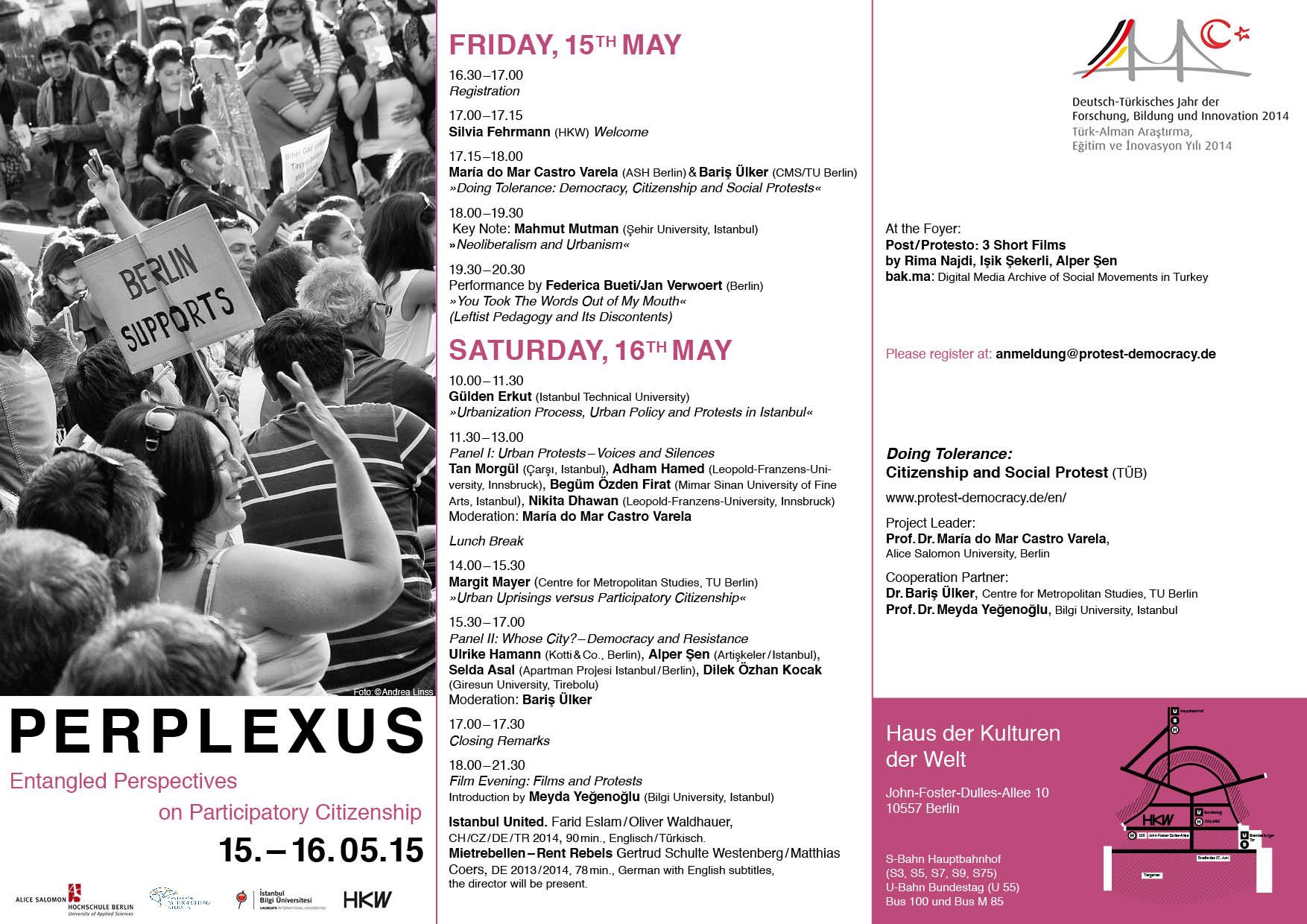
Together with Tan Morgül, Begüm Özdem Firat, Nikita Dhawan and Maria do Mar Castro Varela, I will be discussing about the topic ‚Urban Protests–Voices and Silences‘ at the Haus der Kulturen der Welt, Berlin, on May 16th, 11:30–13:00.
Peace & Conflict Analysis, Mediation & Foreign Policy
Together with Tan Morgül, Begüm Özdem Firat, Nikita Dhawan and Maria do Mar Castro Varela, I will be discussing about the topic ‚Urban Protests–Voices and Silences‘ at the Haus der Kulturen der Welt, Berlin, on May 16th, 11:30–13:00.
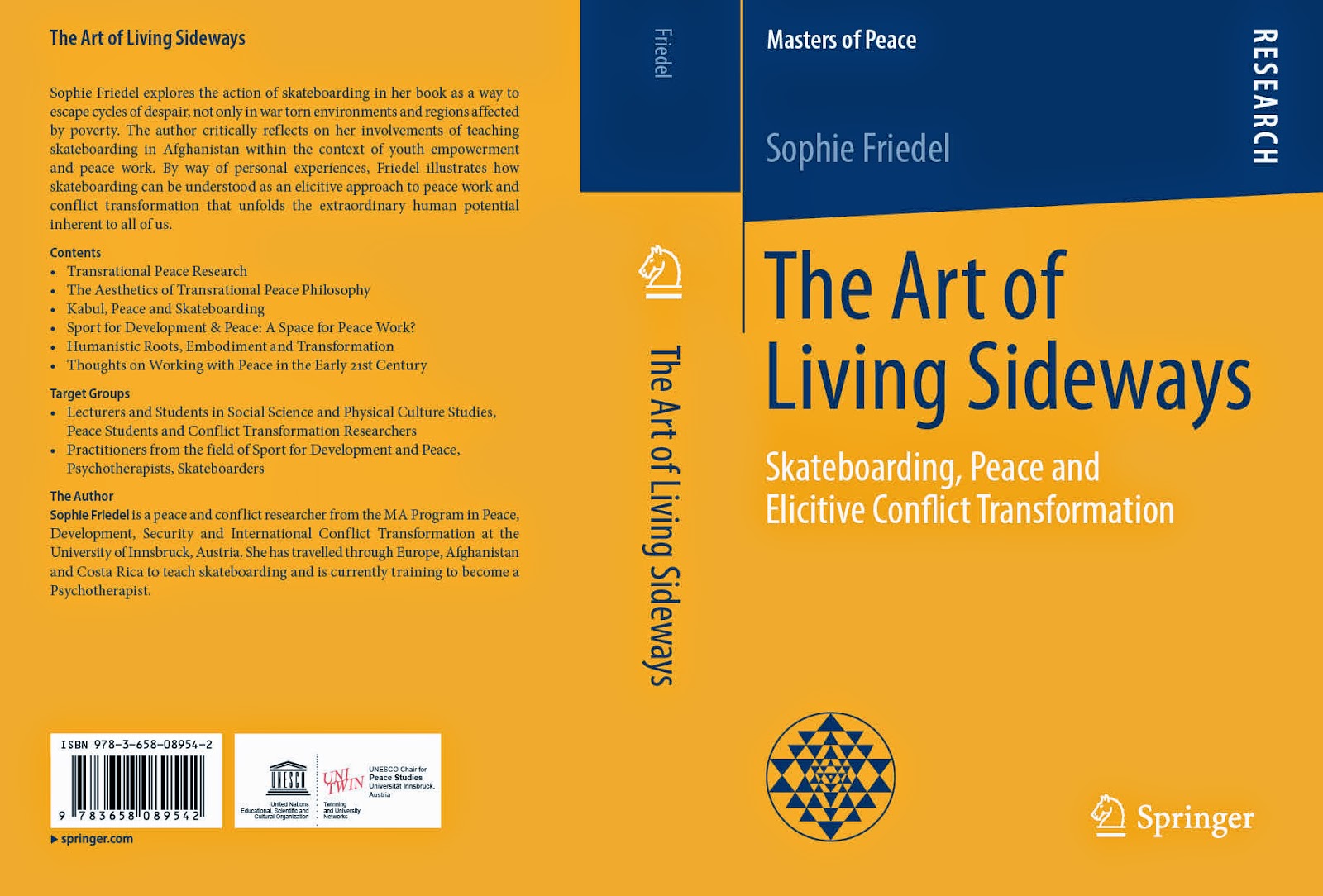
I warmly recommend reading my inspiring colleague Sophie Friedel’s first monograph The Art of Living Sideways!
Sophie Friedel explores the action of skateboarding in her book as a way to escape cycles of despair, not only in war torn environments and regions affected by poverty. The author critically reflects on her involvements of teaching skateboarding in Afghanistan within the context of youth empowerment and peace work. By way of personal experiences, Friedel illustrates how skateboarding can be understood as an elicitive approach to peace work and conflict transformation that unfolds the extraordinary human potential inherent to all of us.
This documentary about the Innsbruck School of Peace Studies gives unique insights into academic program that has become home to me.

Die Sprache der Spitzendiplomatie ist nicht genug: Alternative Ausdrucksformen im Nahostkonflikt sind nötig.
Meine neueste Analyse zum Nahost Konflikt in der Tiroler Tageszeitung vom 10.1.2015 gibt es als online Version hier zu lesen.
This is one of the latest projects I have been working on together with a wonderful team of Peace Studies colleagues from all over the world. (mehr …)
Fatéma Niazy’s Shabka documentary about the book project “Revolution as a Process” has been released.
In November 2013 I invited a group of scholars from diverse academic and cultural backgrounds, both young and experienced, to participate in a cross-reading conference in Cairo. Together with my colleague Lukas Wank, director of the online information platform Shabka, I facilitated this four-days conference. We used Non Violent Communication and Theme Centered Interaction as central methods for our work. Both have been successfully applied and adapted to intercultural settings at the MA Program in Peace Development, Security and International Conflict Transformation at the University of Innsbruck, Austria, from which this project has emerged. The experience of the Cairo conference has been a very important aspect in the process of writing and editing the book „Revolution as a Process: The Case of the Egyptian Uprising“ as it gave space for a very fruitful dialogue about the often different interpretations of the revolution among the authors.
The book does not only aim at providing space for the different narratives and stories about the Egyptian revolution, which have been marginalized recently, but also represents the attempt to change how research and academic cooperation are being conducted. This book was a shared effort by a group of young and established scholars, Egyptian and European researchers, as well as activists and commentators who all deeply care about Egypt.

